



P20 vs P20+Ni Tool Steel: Properties, Comparison, Applications & Selection Guide
The choice of the correct mold steel directly influences machining time, surface finish, dimensional stability, mold life and total tooling cost. P20 vs P20+Ni tool steel are two of the most common choices for plastic injection molds and related tooling.
Both grades relate to plastic mold manufacturing, but are not interchangeable in all applications. P20 is usually chosen for its combination of machinability, toughness, polishability and cost. Nickel-alloyed P20 grades are often considered for larger sections which require more uniform through-hardening.
This guide will explain the differences between P20 vs P20+Ni tool steel their properties, applications, machinability and what mold makers and procurement teams should be looking for when ordering material.
Virat Steels is a leading supplier of tool and die steel to manufacturers of the plastic molding, die casting and precision tooling industries. The P20-family of steels are amongst the most requested grades. Let’s get into the nitty gritty.
What Is P20 Tool Steel?
P20 tool steel is a low alloy mold steel which is commonly used for plastic injection molds, mold bases, tooling components and some die applications.
In Europe the common designation is 1.2311 / 40CrMnMo7 but it is normally linked to AISI P20. For example, Industeel describes 1.2311 as a pre-hardened mold steel for plastic mold applications that is approximately equivalent to P20.
P20 is valued for offering a practical balance between:
- Good machinability
- Good toughness
- Good polishability
- Useful strength in the pre-hardened condition
- Suitable dimensional stability for mould manufacturing
- Good suitability for general-purpose plastic mould tooling
Depending on the producer and supply condition, P20 may be supplied annealed or pre-hardened. Therefore, the actual hardness and machinability should be confirmed against the supplier’s technical datasheet and material certificate.
What Is P20+Ni Tool Steel?
P20+Ni tool steel is a mold steel alloyed with nickel, developed to enhance through hardening properties relative to conventional P20 type grades.
One common designation is DIN 1.2738 / 40CrMnNiMo8-6-4. Nickel addition is especially helpful for a mold or die with a relatively large section in which a more consistent hardness from surface to core is desired.
P20+Ni is widely associated with applications requiring a combination of:
- Good toughness
- Good machinability
- Good polishability
- More uniform hardness in larger sections
- Good dimensional stability
- Reliable performance in plastic mould tooling
The actual performance will depend on the steelmaker, the manufacturing route, the section size and the heat-treatment condition; the mill certificate should always be quoted in the procurement specifications.
P20 Tool Steel Properties
The main attraction of P20 is its balanced performance rather than one extreme property.
1. Good machinability
P20 is usually supplied in a condition that is readily machinable by mold makers to produce cavities, cores, bases and other components. Its machinability is practical for complex mold geometries and general tool making.
2. Good polishability
Surface finish is critical in plastic injection moulding. A properly produced P20-grade steel can provide good polishability, making it suitable for mould surfaces where appearance and surface quality are important.
The final achievable finish, however, depends on steel cleanliness, homogeneity, heat treatment, machining practice and polishing technique.
3. Toughness
P20 offers a useful combination of strength and toughness for general mould applications. This makes it suitable when the mold has to withstand repeated clamping, injection and mechanical stresses without becoming too hard and brittle.
4. Pre-hardened availability
Many P20 products are supplied in a pre-hardened condition. This can reduce or eliminate the need for additional hardening before machining, depending on the required application and supplied condition.
For example, Industeel will specify its 1.2311 mold steel in a pre-hardened condition at around 280-325 HB, while other producers may specify different delivery conditions.
Confirm the actual hardness range with the supplier before machining or designing the mold.
P20+Ni Tool Steel Properties
P20+Ni has several practical features of P20 but has nickel added to raise hardenability.
1. Improved through-hardening
A key reason for choosing P20+Ni is that it provides more uniform hardness over larger sections.
This is particularly important for large mold blocks where a large difference between surface and core properties may have an impact on machining, dimensional stability or service performance.
2. Good toughness
P20+Ni has been developed to provide optimum hardness and toughness rather than just maximum hardness.
This makes it suitable for molds that are subject to repeated mechanical stresses and applications where cracking or premature failure would be costly.
3. Good polishability
P20+Ni grades are commonly selected for moulds requiring good surface finishing and polishing performance. Steel cleanliness and low sulphur practice can be particularly important when high-quality polished surfaces are required.
4. Good machinability
Despite its enhanced hardenability, P20+Ni is still used extensively for mould manufacturing because it provides a useful combination of machinability, toughness and polishability.
P20 vs P20+Ni tool steel: Quick Comparison Table
| Parameter | P20 Tool Steel | P20+Ni Tool Steel |
| Common designation | 1.2311 / P20* | 1.2738 / P20+Ni* |
| Steel type | Plastic mould steel | Nickel-alloyed plastic mould steel |
| Main advantage | Balanced performance and machinability | Improved through-hardening |
| Machinability | Good | Good |
| Toughness | Good | Good to very good, depending on grade/condition |
| Polishability | Good | Good to excellent, depending on quality |
| Large-section performance | Suitable, but section-dependent | Generally preferred for larger sections |
| Typical mould use | General plastic moulds and mould bases | Large/deeper moulds and demanding mould blocks |
| Supply condition | Often pre-hardened | Often supplied pre-hardened |
| Cost | Generally lower | Generally higher |
| Selection priority | General-purpose tooling | Large sections and more uniform core properties |
Exact grade equivalence and specifications should be verified against the applicable standard and mill certificate.
H13 vs P20 vs P20+Ni tool steel: How Does a Hot-Work Steel Compare?
P20 vs P20+Ni tool steel are both cold/warm-work mould steels. H13 (DIN 1.2344) belongs to a different family entirely — it’s a chromium-molybdenum-vanadium hot-work tool steel, built to hold its hardness under sustained heat rather than to machine and polish easily at room temperature. It’s included here because mould makers sometimes weigh it against the P20 family when a tool will see higher thermal or mechanical loading than a standard plastic mould.
Chemical Composition (wt %)
| Element | P20 (1.2311) | P20+Ni (1.2738) | H13 (1.2344) |
| Carbon (C) | 0.35 – 0.45 | 0.35 – 0.45 | 0.32 – 0.45 |
| Silicon (Si) | 0.20 – 0.40 | 0.20 – 0.40 | 0.80 – 1.25 |
| Manganese (Mn) | 1.30 – 1.60 | 1.30–1.60 | 0.20 – 0.60 |
| Phosphorus (P), max | 0.03 | 0.03 | 0.03 |
| Sulphur (S), max | 0.03 | 0.03 | 0.03 |
| Chromium (Cr) | 1.80 – 2.10 | 1.80 – 2.10 | 4.75 – 5.50 |
| Molybdenum (Mo) | 0.15 – 0.25 | 0.15 – 0.25 | 1.10 – 1.75 |
| Vanadium (V) | — | — | 0.80 – 1.20 |
| Nickel (Ni) | — | 0.90–1.20 | — |
H13‘s much higher chromium and the addition of vanadium and higher molybdenum are what separate it from the P20 family — those elements are what give it hot hardness and resistance to thermal fatigue, at the cost of some room-temperature machinability.
Property & Application Comparison
| Parameter | P20 | P20+Ni | H13 |
| Steel family | Cold/warm-work mould steel | Nickel-alloyed cold/warm-work mould steel | Hot-work tool steel |
| Typical supply hardness | 240–280 BHN (pre-hardened) | 280–320 HB (pre-hardened) | Annealed, or pre-hard ~460–500 BHN; hardened & tempered 45–52 HRC |
| Tensile strength | ~965–1030 MPa | ~850–1100 MPa | ~1550–2050 MPa |
| Key strength | Machinability, polishability, cost | Uniform through-hardening in large sections | Hot hardness, thermal fatigue resistance |
| Best suited to | General-purpose plastic moulds | Large/deep mould blocks needing uniform hardness | Die casting, extrusion dies, forging dies, hot-runner components |
| Operating temperature | Ambient/moderate | Ambient/moderate | High, with repeated heating/cooling cycles |
| Typical limitation | Not for high-temperature or high-wear service | Costs more than plain P20; still not a hot-work grade | Lower machinability/polishability than P20; higher material cost |
When to Choose H13 Over the P20 Family
Choose H13 when:
- The tool will see repeated heating and cooling cycles — aluminium or zinc die casting, hot forging dies, or extrusion tooling.
- Resistance to heat checking and thermal fatigue matters more than mirror polish.
- The mould or die runs at elevated temperature for extended periods, where P20 or P20+Ni would soften or lose dimensional stability over time.
Stay with P20 vs P20+Ni tool steel when:
- The tool is a plastic injection mould running at typical moulding temperatures, not a high-heat forming or casting die.
- Machinability, polishability and cost matter more than hot hardness.
- The section size and cavity finish requirements are the deciding factors rather than thermal cycling.
In short: P20 vs P20+Ni tool steel is a choice about section size and through-hardening within the same mould-steel family, while H13 is a different grade altogether — brought in when the application shifts from ambient-temperature plastic moulding to something that runs hot.
P20 Tool Steel Applications
P20 tool steel applications span a wide range of tooling and mould-making needs, including:
- Injection mould cavities and cores for plastic components
- Mould bases for plastic injection moulding tools
- Die-casting dies for lower-volume or less thermally demanding runs
- Blow moulding tools
- Extrusion tooling components
- Structural and holder blocks within larger tool assemblies
- Zinc die-casting dies (in some applications)
Because of its balance of machinability and moderate strength, P20 is often the “workhorse” grade specified when a mould doesn’t require the extreme wear resistance or hardness of tool steels like H13 or D2.
P20+Ni Tool Steel Applications
P20+Ni is typically specified for the same broad categories of tooling as P20, but where the design calls for something more demanding:
- Large injection mould cavity and core blocks, where uniform hardness through a thick section matters
- High-cavitation moulds requiring more consistent wear behavior across a large tool
- Moulds for engineering plastics that place higher mechanical demands on the tool steel
- Precision moulds where dimensional consistency across a large block is critical to part quality
- Die-casting and moulding applications needing slightly better toughness than standard P20 can offer
Machinability: P20 vs P20+Ni tool steel
For mould manufacturers, machinability is an important purchasing consideration because machining can represent a significant portion of mould manufacturing cost.
Both P20 vs P20+Ni tool steel are commonly selected because they can be machined effectively in suitable delivery conditions.
However, machining performance is not determined by the grade name alone.
It can be affected by:
- Actual hardness
- Steelmaking quality
- Inclusion content
- Section size
- Heat-treatment condition
- Cutting tool grade
- Cutting parameters
- Milling strategy
- Coolant or lubrication
- Required surface finish
For this reason, machining parameters should be established from the actual material condition and tooling manufacturer’s recommendations rather than relying only on a generic P20 cutting-speed chart.
How to Choose Between P20 vs P20+Ni tool steel?
The best choice depends on the mould design and production requirements.
Choose P20 when:
- The mould is small to medium-sized.
- General-purpose plastic moulding is involved.
- Good machinability is a priority.
- The application does not demand exceptional through-hardening.
- Initial material cost is an important consideration.
- A conventional pre-hardened mould steel is sufficient.
Choose P20+Ni when:
- The mould contains large or deep sections.
- More uniform hardness through the section is important.
- The mould design has demanding dimensional requirements.
- Toughness and polishability are important.
- The additional material cost is justified by the tooling requirements.
- You want a mould steel specifically selected for improved hardenability.
The decision should ultimately be based on the mould size, plastic material, production volume, required surface finish, machining method, hardness requirement and expected service conditions.
Advantages and Limitations
Advantages of P20
Advantages
- Good machinability
- Good toughness
- Good polishability
- Widely available
- Suitable for general mould manufacturing
- Often available pre-hardened
- Cost-effective for many applications
Limitations
- Not intended to be the best solution for every high-performance mould
- Through-hardening becomes more important as section size increases
- Wear and corrosion requirements may call for another grade
- Actual performance depends strongly on steel quality and condition
Advantages of P20+Ni
Advantages
- Improved hardenability
- Better suitability for larger sections
- Good toughness
- Good machinability
- Good polishability
- Suitable for demanding mould applications
Limitations
- Generally costs more than standard P20
- The benefits may not justify the additional cost for smaller, less demanding moulds
- Exact properties vary by producer and delivery condition
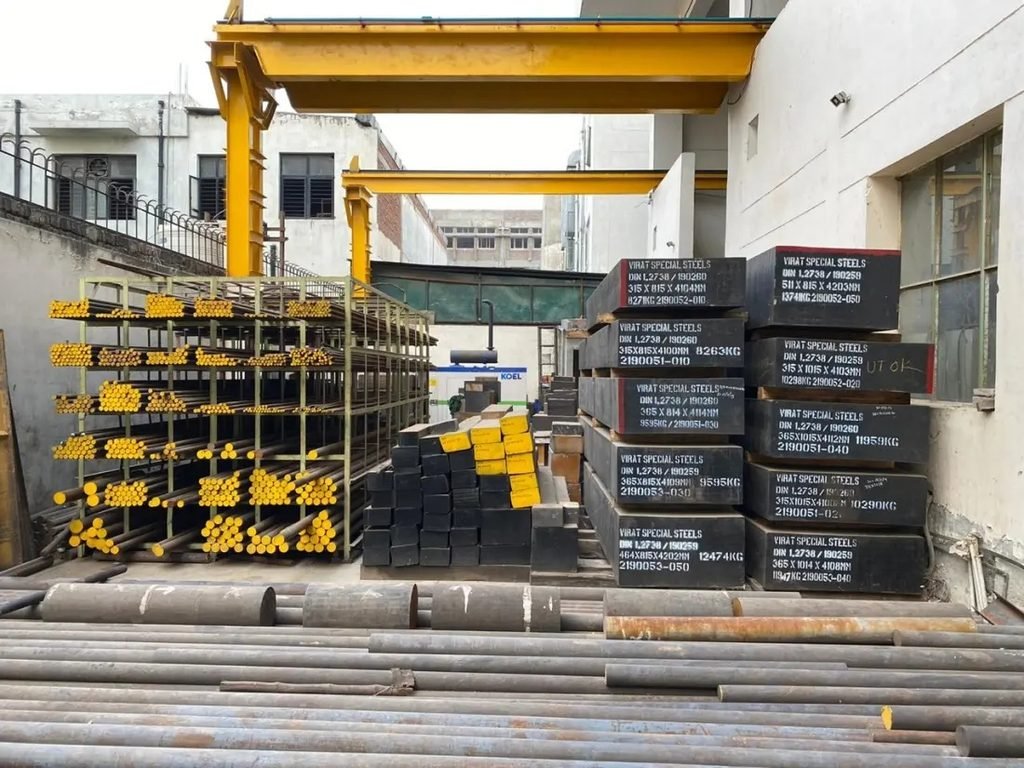
What Should Buyers Check Before Ordering P20 vs P20+Ni tool steel ?
Procurement teams should avoid specifying only “P20 steel” on a purchase order.
A stronger purchasing specification should identify:
- Exact grade designation (e.g., 1.2311 for P20, 1.2738 for P20+Ni)
- Applicable standard
- Required dimensions and section size — especially important for P20+Ni, where the block thickness directly affects through-hardening performance
- Delivery condition (annealed vs. pre-hardened)
- Required hardness range, including surface-to-core hardness uniformity for P20+Ni in larger sections
- Surface condition
- Ultrasonic testing requirements, if applicable
- Material test certificate requirements
- Chemical analysis requirements (nickel content confirmation for P20+Ni)
- Required cutting or machining tolerances
For example, ASTM A681 covers chemical, mechanical and physical requirements for wrought alloy tool-steel products and emphasizes that material selection is based on application, service conditions and properties desired. ISO 4957:2018 specifies requirements for various categories of wrought tool steels and is the current edition.
For P20+Ni specifically, buyers should also request a core hardness test report rather than relying only on surface hardness, since the primary reason to select this grade over standard P20 is uniform hardness through a large section.
Why Material Certification Matters
For critical moulds, the steel supplier should be able to provide appropriate documentation for the supplied material.
Depending on the project, buyers may request:
- Mill Test Certificate (MTC)
- Heat number
- Chemical analysis
- Hardness report
- Ultrasonic testing report
- Dimensional inspection
- Additional inspection documents where specified
The exact inspection requirements should be agreed before purchase.
This is especially important for large mould blocks, where internal quality and consistency can have a major effect on machining and mould performance.
P20 vs P20+Ni tool steel for Indian Mould Manufacturers
Indian mold makers serving the automotive, consumer goods, appliances, electronics, packaging and engineering industries often require steel that offers a combination of performance, availability, machining time and overall tooling cost.
This means that P20 is still a practical option for many general purpose tools, whilst P20+Ni may make more sense for larger and more demanding tooling.
The right material is not always the hardest or the most expensive steel. It is the grade that delivers the required performance without adding extraneous material and processing costs.
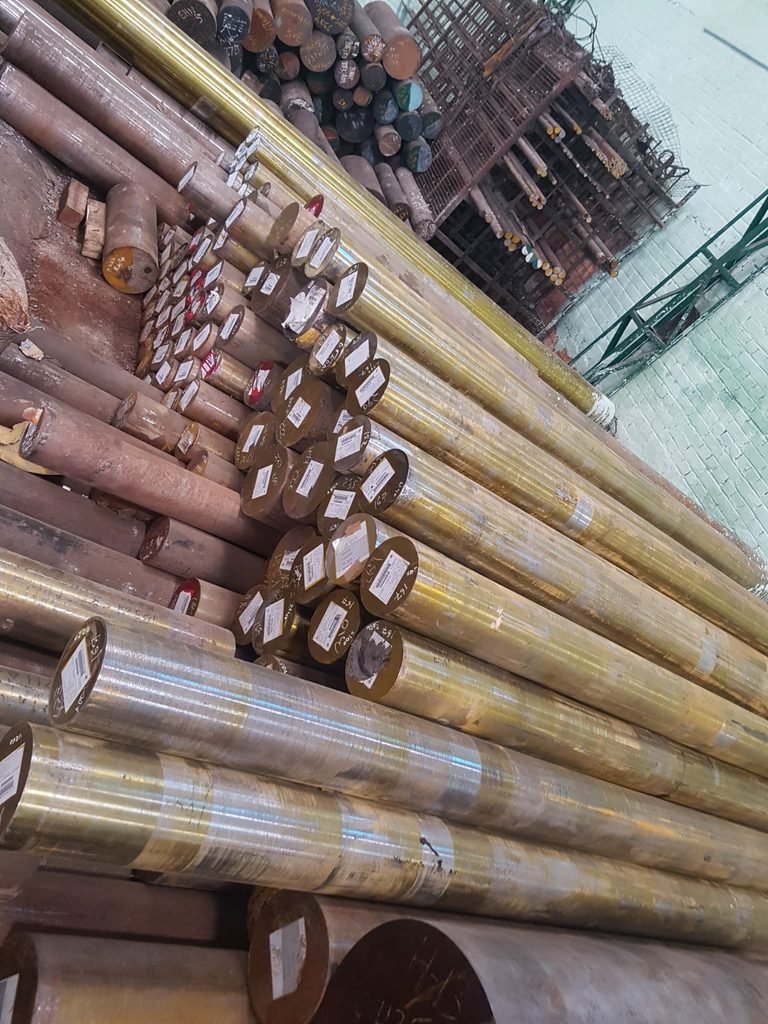
Our Supply Network Across India
With dispatch centers in Gurugram and Ludhiana, we regularly serve mould makers and tool rooms across India, including Delhi, Gurugram, Faridabad, Noida, Ghaziabad, Jaipur, Agra, Ahmedabad, Vadodara, Surat, Rajkot, Mumbai, Pune, Nashik, Indore, Bhopal, Rudrapur, Hyderabad, Kolkata, Belgaum, Chennai, Coimbatore, Hyderabad, Faridabad, Manesar, Bhiwadi,Ludhiana, Chandigarh, Haryana, Punjab and Jamshedpur.
We can offer our P20 vs P20+Ni tool steel in standard or custom sizes, cut to size material, annealed or heat treated condition and material test certificates (MTC) as required. This supply network caters to mold makers, tool rooms, automotive component manufacturers, plastic injection molders and other engineering industries throughout India.
Conclusion
P20 vs P20+Ni tool steel are both valuable choices for mould manufacturing, but they serve slightly different priorities.
P20 tool steel is a practical, versatile choice for many general-purpose plastic moulds because of its machinability, toughness and polishability. P20+Ni becomes particularly attractive when the mould is larger or deeper and more uniform through-hardening is required.
Before purchasing, always verify the exact grade, standard, hardness, section size, delivery condition and material certification rather than selecting steel based only on the commercial name “P20.”
Looking for P20 or P20+Ni Tool Steel in India?
Virat Special Steels supplies tool and mould steels for mould manufacturers, tool rooms, engineering companies and industrial buyers. P20 and P20+Ni can be supplied in suitable forms and sizes subject to grade and stock availability, with cutting and technical support for industrial requirements.
Our technical team will confirm grade equivalence, available sizes and delivery timeline within 24 hours.
Prefer to talk directly?
Gurugram, Haryana | Ludhiana, Punjab
Phone: +91-98140-21775
Email: info@viratsteels.com
Ask the Virat Steels team to verify the required grade, dimensions, hardness, testing and MTC requirements before placing your order.
Frequently Asked Questions
1. What is P20 tool steel?
P20 tool steel is a mould and tool steel commonly used for plastic injection moulds, mould bases, cavities, cores and related tooling. A commonly referenced grade is 1.2311.
2. What is P20+Ni tool steel?
P20+Ni is a nickel-alloyed mould steel, commonly associated with 1.2738, designed to provide improved through-hardening compared with conventional P20-type grades.
3. What is the difference between P20 vs P20+Ni Tool Steel ?
The main difference is the alloy design. P20+Ni contains nickel and is generally selected where improved hardenability and more uniform properties through larger sections are important.
4. Is P20 good for plastic injection moulds?
Yes. P20 is widely used for plastic injection moulds because of its balance of machinability, toughness, polishability and strength.
5. Is P20+Ni better than P20?
Not automatically. P20+Ni can be a better choice for large mould blocks or applications where through-hardening is important. Standard P20 can be more economical for general-purpose tooling.
6. Is P20 supplied pre-hardened?
Many P20 products are available in pre-hardened conditions, but the exact hardness depends on the supplier and product specification. Always confirm the delivery condition before ordering.
7. Can P20 be polished?
Yes. P20 is commonly used for mould applications requiring good polishing performance. Final surface quality also depends on steel cleanliness, machining and polishing practices.
8. Is P20 easy to machine?
P20 is generally considered machinable in appropriate delivery conditions. Actual machining performance depends on hardness, steel quality, cutting tools and machining parameters.
9. What is P20+Ni used for?
P20+Ni is commonly used for large plastic injection moulds, mould blocks, deep cavities and tooling where improved through-hardening and uniform properties are important.
10. Is 1.2311 the same as P20?
1.2311 is commonly associated with P20 and is often marketed as a P20 equivalent. However, buyers should verify the exact standard and chemical/mechanical requirements rather than assuming that every P20-labelled product is identical.
11. Is 1.2738 the same as P20+Ni?
1.2738 is a commonly referenced P20+Ni grade. The exact specification should be confirmed from the producer’s technical documentation and material certificate.
12. Which is better for large moulds: P20+Ni Tool Steel ?
P20+Ni is often preferred for larger sections because its nickel-alloyed composition provides improved through-hardening. The final selection should consider the actual mould dimensions and required hardness profile.
13. Can P20 be used for die casting?
P20 can be used for selected tooling and die applications, but it should not automatically be selected for demanding high-temperature die-casting applications. The operating temperature, thermal cycling, wear and required tool life should be evaluated first.
14. How do I specify P20 steel when buying?
Specify the exact grade, standard, dimensions, delivery condition, hardness requirement and inspection/documentation requirements. For critical applications, request the applicable MTC and testing documentation.
15. Where can I buy P20 vs P20+Ni Tool Steel in India?
Industrial buyers can source P20 and P20+Ni from specialised tool-steel suppliers such as Virat Special Steels, subject to available grade, size, mill and delivery condition.