



virat special steels
now browsing by tag
NLMK Verona Tool Steel: Tough & Stable
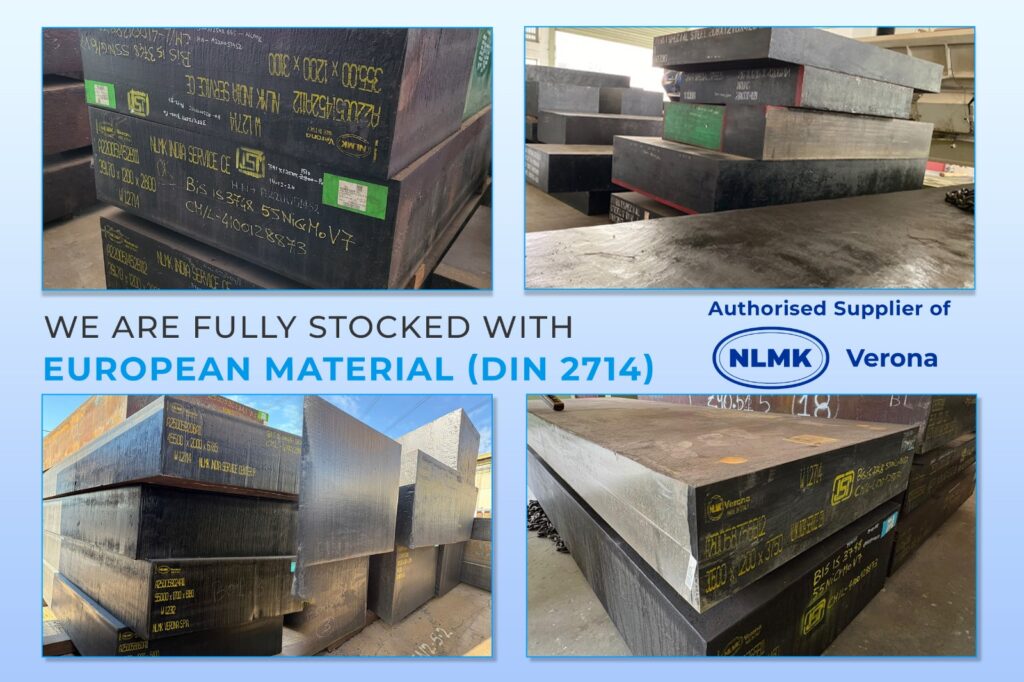
When it comes to tool steel suppliers in India, industries demand materials of high strength, precision, and durability. Virat Steels having great experience consistently in metal domain for 7 decades bringing you the finest in European engineering—NLMK Verona Tool Steel. Known worldwide for its toughness, stability, and performance, this steel is trusted across sectors where reliability is non-negotiable.
What Makes NLMK Verona Tool Steel Exceptional?
NLMK Verona, part of the globally respected NLMK Group, is a leader in European tool steel manufacturing. Their products are engineered to hold extreme industrial conditions, ensuring longer service life and superior efficiency.
- Unmatched Toughness
- Dimensional Stability
- High Performance
Optimized for demanding applications like die-making, forging, and cutting tools.
Applications Across Industries
NLMK Verona’s tool steels are trusted in sectors where precision and durability are non-negotiable:
- Automotive Manufacturing: For molds, dies, and wear-resistant components.
- Aerospace Engineering: Ensuring stability in parts exposed to extreme conditions.
- Heavy Engineering: Industrial machinery, specialized tools.
- General Manufacturing: From injection Molds to stamping dies, performance is guaranteed.
Virat Steels: Your Trusted Tool Steel Supplier in India
Virat Steels don’t just supply steel—We deliver solutions engineered for success. By offering NLMK Verona European Tool Steel, we empower our clients with materials that defines with excellent cutting-edge metallurgy technology.
When you choose Virat Steels, you are choosing:
- Global quality with local expertise
- Quick Service
- Technical guidance to your needs
NLMK Verona’s European Tool Steel is more than just a material—it’s truly a commitment to performance. At Virat Steels, we are proud to bring this world-class steel to industries across India, ensuring that our customers stay ahead in quality and productivity.
Looking for the best tool steel suppliers in India?
Choose Virat Steels—your gateway to Italian Tool steel excellence & Discover authentic European quality with full assurance.
Meanwhile for more details explore on- https://www.viratsteels.com/
Email Us: info@viratsteels.com.
Ph: 98140 – 21775, 99991 – 24971 to 80 , 92163-21771 to 79.
European Die Steels for Longer Tool Life – Backed by NLMK Verona (Italy) & Virat Steels (India)
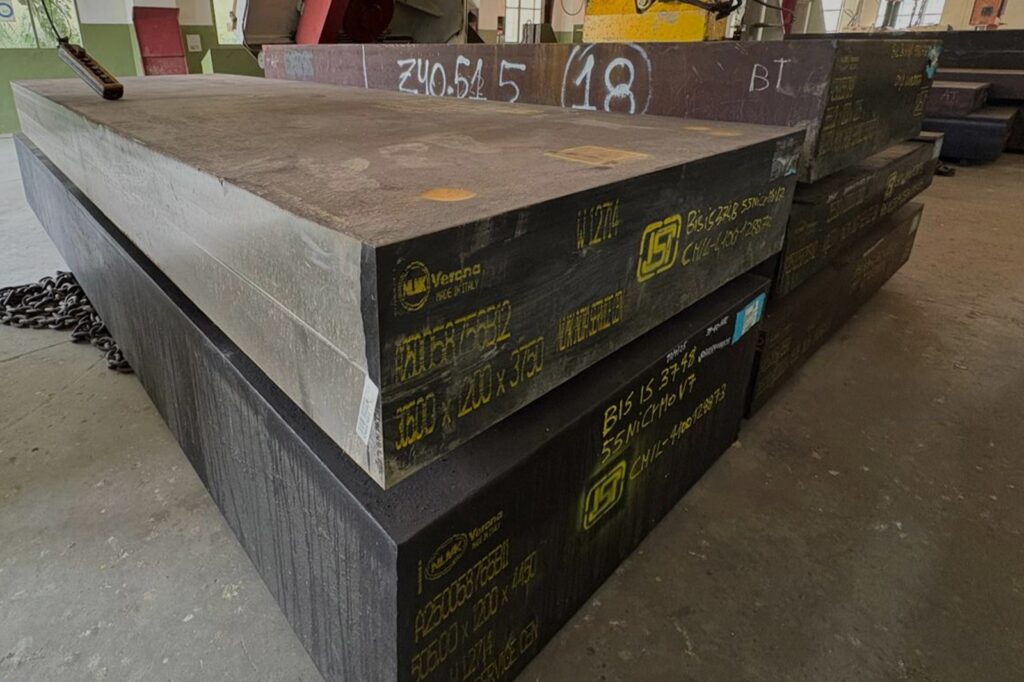
When it comes to tool and die steel, what it truly matters is –tool life, that truly considered as an important technical parameter for improved productivity. This is where European Tool & Die Steel continues to stand out as a proven solution.
Why European Tool Steel Stands Apart?
Globally, European tool steels are recognized for :
- Their advanced steel making technology,
- Strict quality control,
- Consistent performance.
NLMK Verona – European Excellence from Italy
NLMK Verona, based in Verona, Italy—an industrial hub known for metallurgical excellence—is a reputed European producer of high-performance tool and die steels engineered for:
- More tougher & crack-resistant
- Easier to machine
- More dimensionally stable.
When combined with a trusted Indian supply partner, they deliver excellence across tooling and die-making applications in India.
Bringing European Tool Steel to India: NLMK Verona × Virat Steels
Through partnership of NLMK Verona with Virat Steels, now Indian industries will have easier access to European-grade steel with reliable local stocking and service & technically supported solutions.
With over 70+ years of experience in the Indian metal industry, Virat Steels remains a trusted partner for toolmakers and manufacturers, supplying premium grades such as:
DIN 1.2714 | 1.2344 | 1.2738 | 1.2379 | HSS M2, M35 , T1 and more backed by the strong manufacturing expertise of NLMK Verona.
Looking for Genuine European Tool Steel with Assured Performance?
Manufacturers, toolmakers, and industry professionals are invited to connect with us at Mach Auto Expo 2026 to explore more premium European Tool & Die Steel solutions.
📍 Venue: LEC, Ludhiana (Punjab)
📅 Date: 20th Feb -23rdFeb 2026
Visit us to discuss tooling challenges, explore NLMK Verona steel grades, and understand how the right material choice can deliver longer tool life and consistent performance.
From Quality Crisis to Quality Assurance: Virat–NLMK Is Bringing Imported Tool Steel in India
Virat–NLMK Imported Tool Steel in India | Quality Assurance & European Grades.
A Turning Point for India’s Tool Steel Industry
India’s tool and die steel industry is under pressure from rising costs, inconsistent quality, supply disruptions & manipulating “European material” claims. Despite strong demand, access to genuinely high-quality tool steel remains limited leading to growing quality crisis that impacting on productivity and damaging the trust between suppliers and end users across manufacturing sectors.
Genuine European Tool Steel makes the difference –
True European tool steels are manufactured under metallurgical control and advanced refining processes deliver:
• More Dimensionally stable
• Great mechanical properties
• Extended tool life & Higher productivity
Now Available in India Through Virat Steels –
Virat Special Steels , India a trusted name in India’s tool and die steel industry with over 70 years of experience, is proud to announce its partnership with NLMK Verona, Italy-one of Europe’s most reputed makers of high-performance tool and die steels-bringing premium European tool steel to the Indian market.
Until now, only selected suppliers in India are able to offer imported European tool and die steel grades to manufacturers. At a time when the domestic steel industry is facing volatility, Virat Steels, India has built a strong collaboration with NLMK Europe, ensuring reliable local availability and bringing quality to the shop floor.
NLMK Verona’s European metallurgical excellence with Virat Special Steels’ strong Indian stocking, logistics, and technical support, reduce the gap between global quality and local availability.
Global Steel Excellence, Now within Reach
Premium European tool steel is no longer out of reach.
The future of tool steel in India has arrived. Through Virat Special Steels, It is now locally available, reliable, and ready to support the next level of Indian manufacturing.
Looking for genuine European tool steel with assured performance?
👉 Connect with Virat Special Steels to explore NLMK Verona’s premium tool and die steel grades and experience genuine quality assurance.
Meet Us at Mach Auto Expo, Ludhiana on Feb 2026
We invite you to connect with us to explore premium imported materials and industry-focused solutions that will help keep your business ahead — even in challenging times from Leading Indian Supplier Virat Steels.
Venue: Mach Auto Expo 2026, LEC , Ludhiana (Punjab)
Quality Crisis in Tool Steels-Why Reliability matters today?
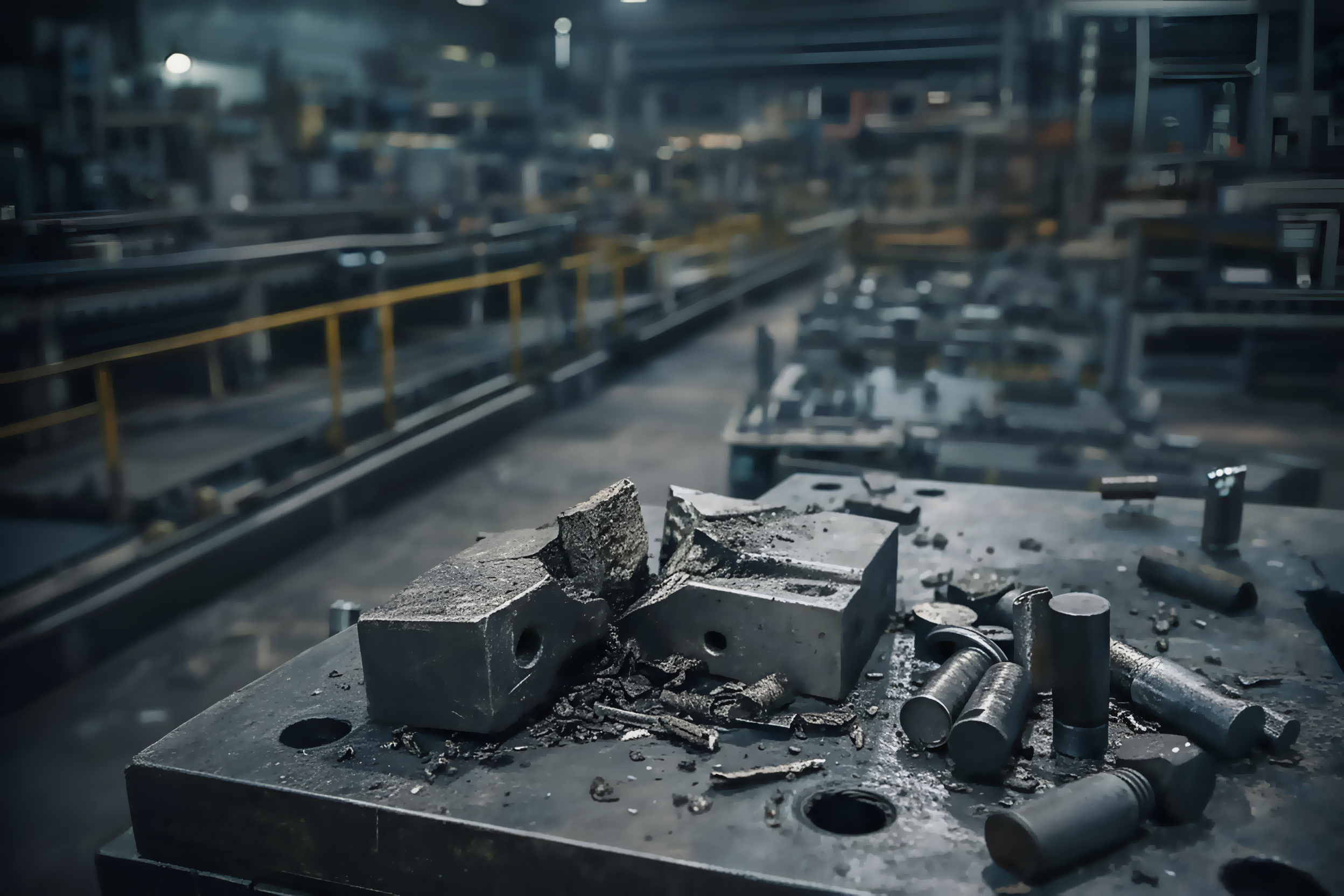
The domestic steel sector is passing through one of its most challenging phases in recent times. Rising raw material costs, uneven quality, supply chain disruptions, and intense price competition have put immense pressure on both the manufacturers and end users. Even a few established German companies also have sold out or shut down their mills and facilities.
While demand from forging, automotive, plastics, and heavy engineering sectors continues, it is becoming more difficult to find die steel and truly high quality tools.
A Growing Industrial Risk
Unfortunately, today many buyers are being misled in the name of “European material”. The major concern is the manipulation of materials by certain suppliers. They charge premium prices while supplying sub-standard materials under the label of premium brands.
What actually happens- is that such suppliers focus only on short-term gains instead of true quality & they may win orders temporarily, but in doing so they break the trust between genuine steel suppliers and end users and ultimately damage the reputation of the image of genuine suppliers who truly deliver certified, high-quality steel.
Industry Challenges: When Solutions Matter the Most
Across industrial sectors, manufacturers are experiencing
- Fluctuating domestic quality
- Shorter tool life
- Premature cracking and
- Increasing expectations for precision and performance.
These issues directly impact productivity, machining accuracy, and overall tool life. In such a scenario, access to reliability, quality, the world-class steel becomes truly essential.
What industries need today is consistent, high-grade steel that meets global standards — not just in name, but in actual performance. This is where European steel material makes a clear difference, enabling higher productivity and long-term growth.
European Tool Steel: Now Closer to Indian Manufacturers
Until now, Only selected suppliers in India have truly been able to offer imported European tool and die steel grades to manufacturers. Over 70 years’ experience in metal domain , Virat Special Steels, India is changing this scenario by making these Premium European Steels more accessible to the Indian industry through strong local stocking, quick service, and technical support guidance with seamless performance and precision right on their shop floor.
Premium European tool steel is no longer out of reach — it is now locally available, reliable and ready to support the Indian manufacturing through Virat Special Steels.
Why is H13 Steel Ideal for Hot Work Tool Applications?
H13 steel is one of the most widely used hot work tool steels, known for its exceptional performance in high-temperature environments. Classified as an air-hardening chromium-molybdenum-vanadium steel, H13 offers an excellent combination of heat resistance, toughness, and wear resistance.
Tool steels like H13 are crucial in industries that require durable and long-lasting tools, such as die casting, forging, and extrusion. Their ability to withstand extreme temperatures without losing mechanical integrity makes them the preferred choice for demanding applications.
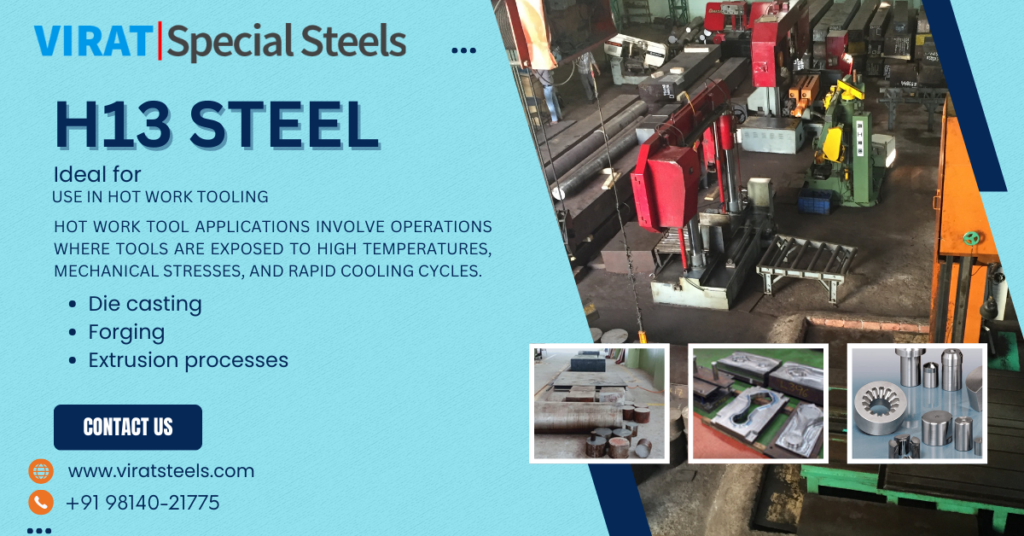
What Are Hot Work Tool Applications?
Hot work tool applications involve operations where tools are exposed to high temperatures, mechanical stresses, and rapid cooling cycles. These conditions demand materials that can maintain their properties without deformation, cracking, or excessive wear.
Industries Using Hot Work Tools
Several industries rely on hot work tools, including:
- Die casting – for producing metal components with intricate shapes
- Forging – shaping metals under extreme pressure
- Extrusion – forming materials into continuous profiles
- Plastic molding – high-heat plastic injection processes
Challenges in Hot Work Environments
Hot work tools face significant challenges, such as:
- High-temperature exposure leading to softening
- Thermal fatigue causing cracks
- Abrasive wear from repeated contact with molten metals
- Mechanical stress-induced failure
This is where H13 steel shines, offering unparalleled resistance to these harsh conditions.
Key Properties of H13 Steel
High Heat Resistance
H13 steel can endure temperatures up to 600°C (1112°F) without losing hardness. This makes it ideal for tools that come into direct contact with molten metals and other high-temperature environments.
Excellent Toughness and Ductility
Toughness is a critical factor in preventing cracking and chipping in hot work tools. H13’s balanced alloy composition provides excellent impact resistance, ensuring tools can withstand mechanical shocks and stress without failure.
Superior Wear Resistance
H13 offers outstanding wear resistance due to its alloying elements, particularly chromium and vanadium. This helps tools maintain their shape and performance over extended periods, reducing downtime and replacement costs.
Good Thermal Conductivity
Efficient heat dissipation is crucial in preventing overheating and thermal fatigue. H13 steel’s thermal conductivity allows it to distribute heat evenly, reducing localized stress and extending tool life.
High Hardenability and Stability
H13 retains its mechanical properties even after repeated heating and cooling cycles. It undergoes heat treatment effectively, ensuring a consistent hardness level and making it easier to machine.
Applications of H13 Steel in Hot Work Tools
Die Casting Molds
Die casting molds require materials that can withstand molten metal injections at high speeds and pressures. H13 steel’s resistance to heat checking and wear makes it ideal for casting aluminum, zinc, and magnesium.
Forging Dies
H13 is widely used in hammer and press forging dies, where it must endure extreme pressure and temperature fluctuations. Its ability to resist thermal fatigue helps prevent premature failure.
Extrusion Dies
Metal extrusion processes generate intense heat and stress. H13 steel ensures dimensional accuracy and prolonged die life, making it the go-to choice for aluminum and steel extrusion dies.
Plastic Molding Dies
In plastic injection molding, molds are subjected to repeated heating and cooling. H13’s stability ensures it can handle continuous cycles without deforming, making it perfect for high-volume production.
Comparing H13 Steel with Other Tool Steels
| Property | H13 Steel | D2 Steel | A2 Steel | P20 Steel |
| Heat Resistance | High | Medium | Low | Medium |
| Wear Resistance | High | Very High | Medium | Low |
| Toughness | High | Low | High | Medium |
| Thermal Conductivity | High | Low | Medium | High |
| Applications | Hot work | Cold work | General-purpose | Plastic molds |
H13 stands out as the best choice for hot work applications, offering a balance of wear resistance, toughness, and heat resistance.
Conclusion
H13 steel is a top-tier material for hot work tool applications, thanks to its:
- Exceptional heat resistance for high-temperature environments
- Toughness and durability to withstand mechanical stress
- Superior wear resistance for prolonged tool life
- Thermal stability to prevent overheating and deformation
With its outstanding properties, H13 remains the preferred steel for industries requiring high-performance hot work tools.
Mode of Supply
Virat Special Steels is the largest stockiest and supplier of H13 tool steel in flat, square and round bar. We provide steel in all sizes as your requirements. H13 die steel is available in flat, square and round shape. Consult our team who will assist you for h13 steel query.
FAQs
- What makes H13 better than other tool steels for hot work applications?
- H13 offers a superior combination of heat resistance, toughness, and wear resistance, making it ideal for demanding applications.
- Can H13 steel be used for cold work applications?
- While possible, H13 is specifically designed for hot work applications and may not perform as well in cold work environments.
- What is the typical hardness range of H13 steel after heat treatment?
- After proper heat treatment, H13 steel can achieve a hardness of 48-52 HRC.
- How does H13 resist thermal fatigue in die casting?
- H13’s heat resistance and thermal conductivity prevent cracking and deformation in extreme temperatures.
- What industries benefit the most from H13 steel?
Die casting, forging, extrusion, and plastic molding industries rely on H13 for durable tooling solutions.
What is H13 Steel and Its Applications?
Introduction
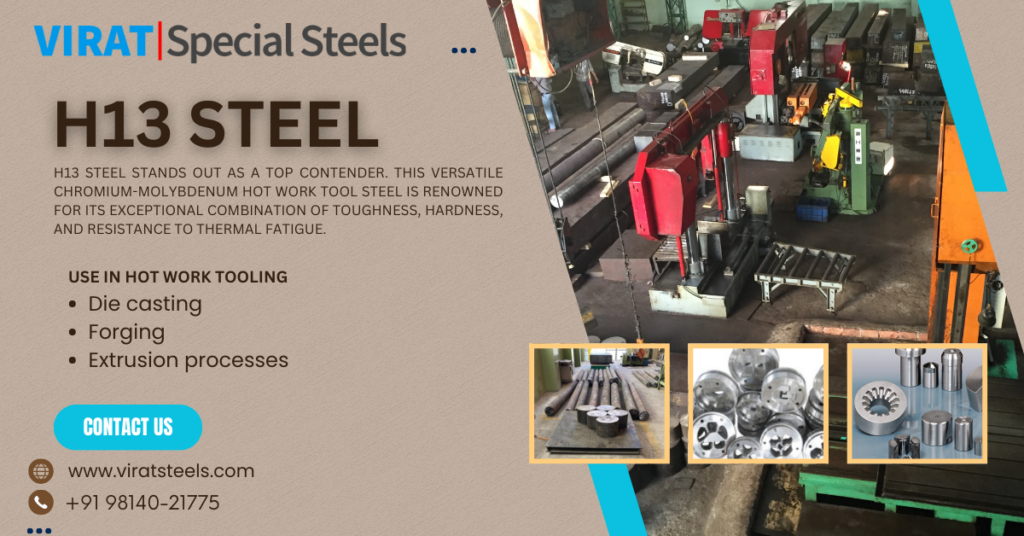
When it comes to materials that can withstand extreme conditions, H13 steel stands out as a top contender. This versatile chromium-molybdenum hot work tool steel is renowned for its exceptional combination of toughness, hardness, and resistance to thermal fatigue. Its unique properties make it indispensable across various industries, from automotive to aerospace.
Chemical Composition of H13 Steel
The remarkable characteristics of H13 steel are rooted in its specific chemical makeup. The typical composition includes:
- Carbon (C): 0.32 – 0.40%
- Chromium (Cr): 5.13 – 5.25%
- Molybdenum (Mo): 1.33 – 1.4%
- Vanadium (V): 1.0%
- Silicon (Si): 1.0%
- Manganese (Mn): 0.20 – 0.50%
Each element plays a pivotal role:
- Carbon enhances hardness and strength.
- Chromium improves hardenability and resistance to oxidation.
- Molybdenum increases toughness and high-temperature strength.
- Vanadium contributes to wear resistance and grain refinement.
- Silicon boosts strength and elasticity.
- Manganese aids in deoxidation during steel production.
This balanced composition ensures that H13 steel maintains its integrity under demanding conditions.
Physical Properties of H13 Steel
Understanding the physical properties of H13 steel provides insight into its performance in various applications:
- Density: Approximately 7.80 g/cm³ (0.282 lb/in³)
- Thermal Conductivity: 24.3 W/m-K at 215°C (419°F)
- Coefficient of Thermal Expansion: 11.0 µm/m-°C between 25°C and 95°C
These properties indicate that H13 steel can efficiently conduct heat while maintaining dimensional stability, crucial for tools exposed to rapid temperature changes.
Mechanical Properties of H13 Steel
The mechanical prowess of H13 steel is evident in its ability to withstand substantial stress without deformation:
- Hardness: Rockwell C scale hardness ranges from 28 to 53, depending on heat treatment.
- Tensile Strength: Ultimate tensile strength can reach up to 1990 MPa (289,000 psi).
- Toughness: Demonstrates excellent toughness, essential for resisting cracking under impact.
These attributes make H13 steel suitable for applications requiring both strength and durability.
Heat Treatment Processes for H13 Steel
To optimize its properties, H13 steel undergoes specific heat treatment processes:
- Annealing: Heating to 1550°-1650°F, holding until uniformly heated, then cooling slowly to about 1000°F to soften the steel for machining.
- Hardening: Heating to 1800°-1850°F, followed by air or oil quenching to achieve desired hardness.
- Tempering: Reheating to 1000°-1150°F, depending on the required hardness, to reduce brittleness.
These treatments enhance the steel’s performance in various applications.
Advantages of Using H13 Steel
H13 steel offers several notable benefits:
- High-Temperature Resistance: Maintains strength and hardness at elevated temperatures, making it ideal for hot work applications.
- Wear Resistance: The presence of vanadium carbides provides excellent resistance to abrasion.
- Thermal Fatigue Resistance: Can withstand repeated heating and cooling cycles without cracking.
These advantages contribute to its widespread use in demanding environments.
Applications
1. Applications in Hot Work Tooling
H13 steel is widely used in hot work tooling applications where materials are subjected to high temperatures and extreme mechanical stress. Some of its key applications in this domain include:
- Die Casting Dies: H13 steel is commonly used for die-casting dies due to its excellent heat resistance, wear resistance, and toughness. The ability to withstand the rapid heating and cooling cycles involved in die-casting operations ensures longer tool life.
- Extrusion Dies: In aluminum and other metal extrusion processes, H13 steel is used to manufacture dies that shape and form metal billets. The steel’s strength and thermal stability prevent premature wear and deformation.
- Forging Dies: H13 steel is used in the production of forging dies that shape metal parts through high-pressure impacts. The toughness and heat resistance of H13 help the dies maintain their shape under extreme conditions.
These applications make H13 an indispensable material in the hot work tooling industry, ensuring efficiency, precision, and durability.
2. Applications in Cold Work Tooling
Although primarily known for hot work applications, H13 steel also finds limited usage in cold work tooling where wear resistance and impact strength are required. Some examples include:
- Shear Blades: H13 steel is used for manufacturing shear blades that cut or trim metal sheets, where its hardness and durability contribute to precision and long service life.
- Stamping Dies: H13 is occasionally used in stamping dies for cold-forming applications, where its wear resistance helps maintain die integrity.
- Plastic Molds: While more common in hot work environments, H13 is also used for plastic injection molding where high strength and heat resistance are necessary.
Although other cold work steels like D2 or O1 may be preferred for most cold work applications, H13’s versatility allows it to be used where both wear resistance and toughness are required.
3. Use in Plastic Injection Molding
H13 steel is one of the top choices for plastic injection molding tools, particularly for mold inserts. Some advantages include:
- High Thermal Conductivity: Ensures efficient heat dissipation, reducing cycle times and improving productivity.
- Wear and Corrosion Resistance: Prevents mold degradation, ensuring longevity and consistent production quality.
- Dimensional Stability: H13 maintains its structure under high pressure and temperature, reducing warping and defects in molded parts.
These properties make H13 a preferred material for injection molding applications, where durability and precision are critical.
4. H13 Steel in the Automotive Industry
The automotive sector relies on H13 steel for various high-performance applications. Some of the most common uses include:
- Engine Components: H13 steel is used in manufacturing engine components such as cylinder heads, pistons, and exhaust valves, where high-temperature resistance is necessary.
- Structural Parts: Some automotive manufacturers use H13 in critical structural components that must withstand mechanical and thermal stress.
- Tooling for Manufacturing: Many of the dies and molds used in automotive production, including stamping dies and injection molds, are made from H13 steel.
The exceptional properties of H13 steel help improve the durability and performance of automotive parts and manufacturing processes.
5. H13 Steel in the Aerospace Industry
The aerospace industry demands materials with superior strength, heat resistance, and toughness. H13 steel meets these requirements and is used in:
- Turbine Blades: Due to its heat resistance, H13 is used in manufacturing certain aerospace turbine components exposed to high temperatures.
- Structural Components: Some aerospace structures, including landing gear and support brackets, benefit from the toughness of H13 steel.
With the aerospace industry constantly pushing for high-performance materials, H13 remains a strong candidate for demanding applications.
Conclusion
H13 steel is a versatile and high-performance material used in numerous industries, including automotive, aerospace, die-casting, and injection molding. Its unique combination of high-temperature resistance, wear resistance, and toughness makes it an ideal choice for hot work tooling and other demanding applications. While it has some limitations, proper heat treatment and machining techniques help maximize its benefits. Whether in the production of industrial tools, aerospace components, or plastic molds, H13 remains a top-tier tool steel for high-performance applications.
Mode of Supply
Virat Special Steels is the largest stockiest and supplier of H13 tool steel in flat, square and round bar. We provide steel in all sizes as your requirements. H13 die steel is available in flat, square and round shape. Consult our team who will assist you for h13 steel query.
FAQs
1. What makes H13 steel suitable for high-temperature applications?
H13 steel has excellent thermal fatigue resistance, high wear resistance, and superior toughness, making it ideal for high-temperature applications such as die casting and forging.
2. How does H13 steel compare to D2 tool steel?
H13 is better suited for high-temperature applications, while D2 is a cold work steel with superior wear resistance. Choosing between them depends on whether heat resistance or abrasion resistance is a priority.
3. Can H13 steel be welded?
Yes, H13 steel can be welded, but it requires preheating and post-weld heat treatment to prevent cracking and ensure structural integrity.
4. What industries commonly use H13 steel?
H13 steel is widely used in die-casting, plastic injection molding, aerospace, automotive manufacturing, and hot work tooling applications.
5. How does heat treatment affect H13 steel?
Proper heat treatment enhances H13 steel’s hardness, strength, and resistance to thermal fatigue, ensuring optimal performance in demanding applications.
The best practices for recycling DB6 and H13 steels
Introduction
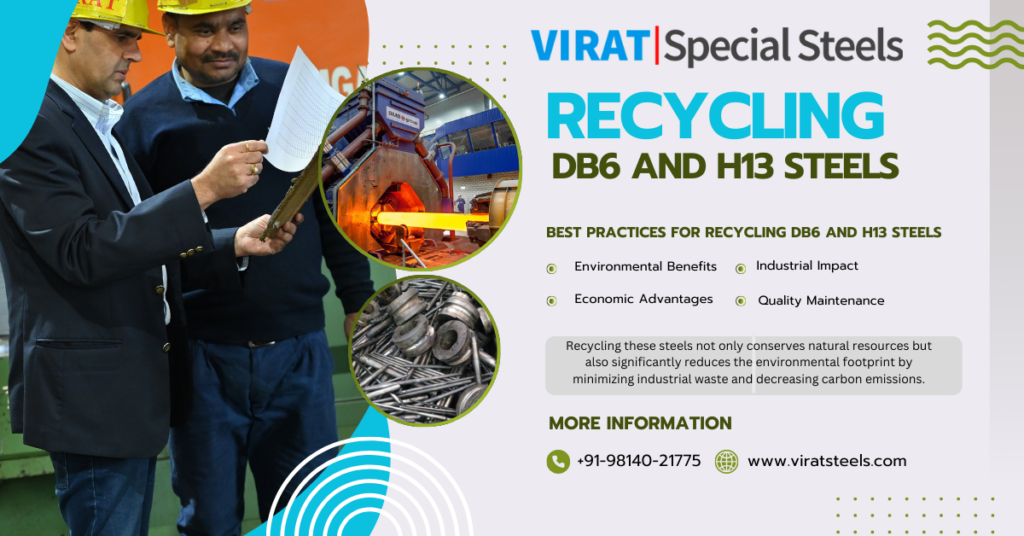
Recycling and sustainability have become crucial aspects of the modern steel industry. With the increasing demand for high-performance tool steels such as DB6 and H13, manufacturers and industries need to adopt efficient recycling and sustainable manufacturing practices. Recycling these steels not only conserves natural resources but also significantly reduces the environmental footprint by minimizing industrial waste and decreasing carbon emissions.
In this article, we will explore the best practices for recycling DB6 and H13 steels, highlight the importance of sustainability, and discuss innovative methods being used to ensure a greener future for the steel industry.
Understanding DB6 and H13 Steels
What is DB6 Steel?
DB6 is a hot work tool steel known for its high toughness, wear resistance, and excellent thermal stability. It is widely used in applications such as:
- Die casting
- Forging dies
- Plastic molds
What is H13 Steel?
H13 is another hot work tool steel, but it is recognized for its high strength, shock resistance, and superior heat resistance. It is commonly used in:
- High-pressure die casting
- Extrusion dies
- Cutting tools
Why Are These Steels Preferred?
Both DB6 and H13 are extensively used due to their long lifespan, excellent mechanical properties, and ability to withstand high temperatures. However, their wide usage also means significant material waste if not recycled efficiently, making sustainability a key concern.
Importance of Recycling DB6 and H13 Steels
Recycling DB6 and H13 tool steels provides numerous environmental, economic, and industrial benefits, such as:
Environmental Benefits
- Reduction in Mining Activities: Less reliance on mining for raw materials, leading to lower deforestation and soil degradation.
- Lower Carbon Footprint: Recycling steel emits less CO₂ compared to new steel production.
- Waste Reduction: Prevents discarded tools and machine parts from ending up in landfills.
Economic Advantages
- Cost Savings: Recycled steel is cheaper to process compared to producing new steel from iron ore.
- Job Creation: The recycling industry generates employment opportunities in steel collection, processing, and re-manufacturing.
Industrial Impact
- Reliable Supply Chain: Reduces dependency on fluctuating raw material markets.
- Quality Maintenance: Ensures industries maintain consistent material properties without resource depletion.
Best Practices in Recycling DB6 and H13 Steels
To ensure effective recycling of DB6 and H13 steels, industries should follow these best practices:
1. Collection and Sorting of Scrap
- Segregate DB6 and H13 steel scraps based on composition and purity.
- Remove contaminants such as coatings, oils, and residual chemicals before recycling.
2. Efficient Melting and Refining Processes
- Use energy-efficient furnaces such as electric arc furnaces (EAFs) for melting steel scrap.
- Introduce vacuum degassing techniques to eliminate impurities and enhance steel quality.
3. Minimizing Energy Consumption
- Utilize waste heat recovery systems to optimize energy usage during melting.
- Improve process automation to reduce excess energy loss.
The Role of Sustainable Steel Production
Sustainability in DB6 and H13 steel production goes beyond just recycling. Manufacturers must also adopt eco-friendly practices to ensure a minimal carbon footprint.
1. Energy-Efficient Manufacturing
- Use electric arc furnaces (EAFs) instead of traditional blast furnaces.
- Upgrade equipment and technology for better process efficiency.
2. Reducing Carbon Emissions
- Implement low-carbon production techniques, such as using hydrogen instead of coal.
- Reduce waste production through lean manufacturing principles.
3. Use of Renewable Energy
- Switch to renewable power sources, such as solar or wind energy, in manufacturing plants.
Challenges in Recycling DB6 and H13 Steels
Despite the advantages, recycling DB6 and H13 steels comes with several challenges:
1. Contamination Issues
- Impurities such as paint, coatings, and lubricants can alter the quality of recycled steel.
2. High Recycling Costs
- Advanced sorting and refining processes require costly equipment and technology.
3. Technological Limitations
- Some recycling facilities lack the necessary machinery to process tool steels effectively.
4. Market Demand for Recycled Steel
- Industries prefer virgin steel due to consistent material properties, making the demand for recycled DB6 and H13 relatively low.
Innovations in Steel Recycling
Technological advancements are transforming DB6 and H13 steel recycling.
1. AI-Based Scrap Sorting
- Automated sorting systems use AI and sensors to classify scrap based on chemical composition.
2. Eco-Friendly Melting Technologies
- Innovations such as plasma arc furnaces enhance steel melting efficiency.
3. Closed-Loop Recycling
- Encourages industries to reuse steel waste internally to minimize material loss.
4. Sustainable Alloying Techniques
- Research focuses on developing alternative alloy compositions with improved recyclability.
Regulatory Compliance and Sustainability Standards
Global standards promote sustainable steel recycling:
1. Government Regulations
- Policies such as extended producer responsibility (EPR) require manufacturers to manage steel waste efficiently.
2. International Standards (ISO 14001, ISO 50001)
- ISO 14001: Guidelines for environmental management systems.
- ISO 50001: Framework for improving energy efficiency in steel production.
3. Industry Best Practices
- Leading steel producers follow green manufacturing protocols to align with climate action goals.
The Future of Sustainable Steel Production
The steel industry is embracing sustainable and innovative solutions:
1. Green Steel Manufacturing
- Companies are shifting towards hydrogen-based steel production, reducing carbon emissions.
2. Circular Economy Integration
- Instead of linear waste disposal, manufacturers are adopting closed-loop recycling models.
3. Carbon Capture in Steel Production
- Emerging carbon capture and storage (CCS) technologies help trap emissions before they enter the atmosphere.
Conclusion
The recycling and sustainability of DB6 and H13 steels are essential for reducing industrial waste, conserving resources, and minimizing environmental impact. By following best practices, such as efficient collection, processing, and adoption of green technologies, industries can enhance sustainability while maintaining cost-efficiency.
The future of sustainable steel manufacturing lies in embracing innovations, complying with global regulations, and shifting towards eco-friendly production methods. Every effort in steel recycling brings us one step closer to a greener planet!
FAQs
1. Why is recycling DB6 and H13 steels important?
Recycling these steels reduces waste, lowers production costs, and helps conserve natural resources and energy.
2. What challenges exist in recycling tool steels?
Common challenges include contamination, high recycling costs, technological limitations, and fluctuating market demand.
3. What are the best methods for improving steel recycling efficiency?
Using advanced sorting technologies, energy-efficient melting processes, and closed-loop recycling systems helps optimize efficiency.
4. How does sustainable steel production impact the environment?
It reduces carbon emissions, conserves energy, and minimizes industrial waste, contributing to a healthier planet.
5. What is the future of sustainable steel recycling?
The future includes green hydrogen-based production, circular economy models, and carbon capture technologies for a low-carbon steel industry.
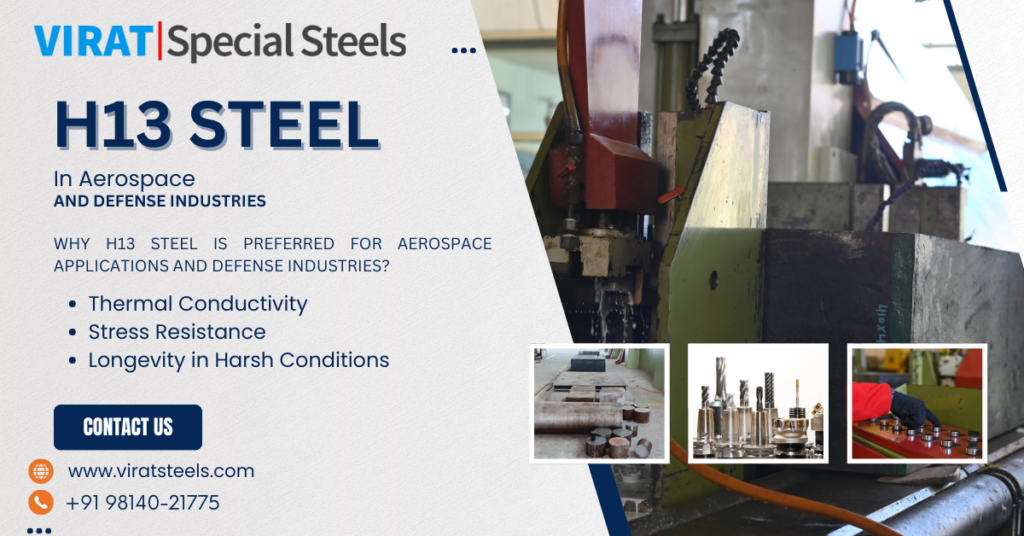
Applications of H13 Steel in Aerospace and Defense Industries
H13 steel is a versatile tool steel with exceptional properties such as heat resistance, toughness, and wear resistance, making it a popular choice for industries requiring high performance. Its ability to retain its properties under extreme temperatures and stress makes it a staple in aerospace and defense sectors.
Overview of H13 Steel Composition and Properties
H13 steel is primarily composed of chromium, molybdenum, and vanadium, providing:
- High strength: Resilience to intense forces.
- Heat resistance: Suitable for high-temperature environments.
- Wear resistance: Longevity under constant use.
This unique composition equips H13 steel to meet the challenges of demanding industrial applications.
Importance of H13 Steel in Industrial Applications
Industries rely on H13 steel for its adaptability in high-performance contexts. Its structural integrity, even under stress, ensures operational efficiency and cost-effectiveness over time.
Why H13 Steel Is Preferred for Aerospace Applications
In aerospace, material performance is critical. H13 steel delivers advantages that align with the sector’s stringent demands.
Key Properties of H13 Steel Advantageous for Aerospace
- Thermal Conductivity: Ensures stability during rapid temperature changes.
- Stress Resistance: Retains structure under high pressure.
Types of Aerospace Components Made with H13 Steel
- Engine Parts: Endure high temperatures and mechanical stress.
- Aerospace Tooling Equipment: Crucial for precision in manufacturing processes.
Applications of H13 Steel in Aerospace Industries
Heat-Resistant Aerospace Engine Components
The aerospace industry requires materials that endure extreme heat during operation, such as jet engine turbines and rocket nozzles. H13 steel’s ability to resist thermal degradation ensures consistent performance even in these high-stress environments.
Aircraft Tooling and Manufacturing Dies
Precision is non-negotiable in aerospace manufacturing. H13 steel is indispensable for crafting tools and dies that remain accurate across extensive production cycles. This minimizes downtime and increases productivity.
Why H13 Steel Is Ideal for Defense Applications
H13 steel is a go-to material for defense applications where reliability and strength are essential.
Robustness and Reliability Under Tough Conditions
Military equipment often operates under harsh conditions, from arid deserts to frigid Arctic zones. H13 steel withstands these extremes, ensuring longevity and performance in defense scenarios.
Versatility of H13 Steel in Defense
From crafting ballistic components to manufacturing military vehicles, the adaptability of H13 steel is unparalleled. Its ability to handle high stress without deformation makes it an ideal candidate for a variety of defense-related uses.
Future Outlook for H13 Steel in Aerospace and Defense
The future of H13 steel in these industries looks promising as the demand for high-performance materials continues to grow.
Predicted Growth in Applications
With the expansion of aerospace technology, such as hypersonic aircraft and reusable rockets, the demand for materials that offer excellent thermal and mechanical properties will increase. Similarly, advanced defense projects will rely heavily on the performance reliability of H13 steel.
Evolving Material Enhancements
Research in material science is leading to improved variants of H13 steel with higher stress resistance, reduced weight, and better machinability. These advancements will further solidify H13’s position as a cornerstone of aerospace and defense manufacturing.
Conclusion
H13 steel has firmly established itself as a key player in the aerospace and defense industries. Its unique properties of heat resistance, toughness, and durability allow it to meet the stringent demands of high-performance environments. From manufacturing jet engines to precision dies in military tooling, its applications demonstrate unmatched reliability and versatility. As innovations continue to refine this material, H13 steel will remain critical to the success and advancement of aerospace and defense technologies.
Mode of Supply:
Virat Special Steels is the largest Supplier & Stockiest of H13 Steel in India. Consult our team who will assist you for H-13/ DIN 2344 / AISI H13 steel query. https://www.viratsteels.com/h13.html
Size Range in Forged / Rolled Bars:
Rounds: 13mm Dia to 1500mm Dia
Rectangular: Thickness 13mm – 500mm / Width 13mm to 1500mm
For more information or to discuss your steel needs, Virat Special Steels invites you to reach out through their contact details provided, ensuring a professional and informative experience.
Any further queries feel free to contact us :
🌐https://www.viratsteel.in 📬 info@viratsteels.com ☎+91 98140-21775
FAQs on H13 Steel Applications
1. What makes H13 steel unique compared to other steels?
H13 steel’s high heat resistance, durability, and wear resistance set it apart, making it ideal for extreme environments like aerospace and defense applications.
2. What are the cost implications of using H13 steel in aerospace?
While the initial costs of H13 steel may be higher, its longevity and reduced maintenance requirements offer excellent long-term cost-effectiveness.
3. Is H13 steel environmentally friendly for defense industries?
Innovations like eco-friendly manufacturing processes and recyclable materials are helping make H13 steel more sustainable.
4. How does H13 steel handle high temperatures?
Thanks to its exceptional thermal conductivity and resistance to heat cycling, H13 steel maintains stability and performance under extreme heat.
5. What are the future innovations anticipated for H13 steel?
Expected advancements include enhanced alloy compositions, better weight-to-strength ratios, and sustainable manufacturing processes.
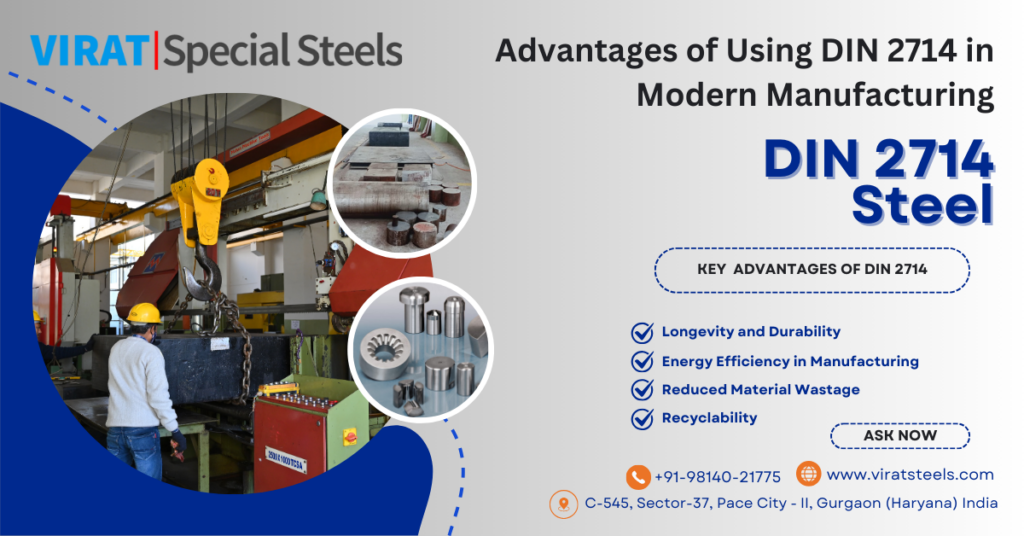
Advantages of Using DIN 2714 in Modern Manufacturing
In today’s world, where sustainability and environmental responsibility have become global priorities, the manufacturing industry is evolving to adopt greener technologies and practices. A significant contributor to this shift is the strategic use of advanced materials like DIN 2714, which not only enhances performance but also offers considerable environmental benefits.
Understanding DIN 2714
DIN 2714 is a high-quality tool steel known for its excellent toughness, wear resistance, and high strength. It’s widely utilized in the forging and die-making industries to produce components that endure extreme mechanical stress. Its exceptional properties contribute to reduced waste, energy efficiency, and sustainable production processes.
Key Environmental Advantages of DIN 2714
1. Longevity and Durability:
The primary environmental advantage of DIN 2714 is its exceptional durability. Components made from this steel are resilient and maintain their structural integrity even under severe conditions. This reduces the frequency of replacements, leading to decreased consumption of raw materials and reduced waste in manufacturing. By lasting longer, DIN 2714 components contribute to a circular economy, minimizing resource depletion.
2. Energy Efficiency in Manufacturing:
The advanced metallurgical properties of DIN 2714 allow for more efficient manufacturing processes. Its high thermal resistance means fewer energy-intensive treatments are required during production. Furthermore, the improved tool performance reduces the downtime and energy associated with frequent maintenance or replacement.
3. Reduced Material Wastage:
The toughness and precision-forming capabilities of DIN 2714 ensure minimal material wastage during machining and forging operations. Manufacturers benefit from precise tolerances and reduced scrap, directly contributing to environmentally friendly production practices.
4. Recyclability:
Tool steels like DIN 2714 are highly recyclable. End-of-life products made from this steel can be melted and repurposed, conserving natural resources and minimizing the environmental impact of metal extraction. This closed-loop recycling system aligns with the goals of sustainable development and resource optimization.
5. Improved Operational Efficiency:
The enhanced performance characteristics of DIN 2714 lead to reduced machine wear and operational inefficiencies. Machines equipped with DIN 2714 components can operate for extended periods with consistent performance, translating to lower energy consumption and reduced carbon emissions.
Supporting Green Manufacturing Practices:
The use of DIN 2714 in modern manufacturing aligns seamlessly with environmentally conscious practices such as lean manufacturing and green supply chain management. Manufacturers can integrate this material into their operations to meet stringent environmental regulations and standards, such as ISO 14001. Moreover, by choosing materials like DIN 2714, companies demonstrate a commitment to environmental sustainability, bolstering their reputation in an increasingly eco-conscious market.
Conclusion
Incorporating advanced materials like DIN 2714 into modern manufacturing processes is a step forward in achieving sustainability and environmental stewardship. Its longevity, energy efficiency, recyclability, and ability to minimize waste make it a preferred choice for industries striving to reduce their carbon footprint. By adopting DIN 2714, manufacturers not only enhance operational efficiency but also contribute to a greener future for generations to come.
Virat Special Steels is proud to provide premium-grade DIN 2714 tool steel, ensuring both performance excellence and a commitment to environmental sustainability. Let’s work together to build a cleaner, greener industrial landscape.
Understanding the Role of Chromium in H13 Steel Composition
Overview of Tool Steels
Tool steels are a unique class of alloys designed to endure extreme conditions. With their exceptional hardness, heat resistance, and wear resistance, they are an indispensable part of industries such as manufacturing, automotive, and aerospace.
What Makes H13 Steel Special?
H13 steel is a premium-grade hot work tool steel renowned for its strength and versatility. Thanks to its well-balanced composition, H13 performs admirably under thermal cycling, maintaining high durability and toughness. One standout component of H13 steel is chromium, a key player in its overall performance.
The Role of Chromium in Steel Alloys
Why Chromium is an Essential Alloying Element
Chromium has long been valued in steel manufacturing for enhancing durability and corrosion resistance. This element forms a protective oxide layer that acts as a barrier against oxidative damage, making it a cornerstone in high-performance steels like H13.
Impact on Mechanical Properties
Chromium not only prevents corrosion but also improves hardness and tensile strength. In H13 steel, the presence of chromium elevates the alloy’s ability to handle mechanical and thermal stress without compromising integrity.
Chemical Composition of H13 Steel
Key Alloying Elements
H13 steel comprises several essential elements, including iron, carbon, chromium, molybdenum, vanadium, and silicon. Each element contributes to its properties, but chromium plays a prominent role in defining its functionality.
| Element | Approx. Percentage (%) |
| Carbon | 0.32–0.45 |
| Chromium | 4.75–5.50 |
| Molybdenum | 1.10–1.75 |
| Vanadium | 0.80–1.20 |
Chromium Content and Its Significance
The 4.75-5.50% chromium in H13 is optimal for achieving hardness, resistance to wear, and thermal stability. This concentration ensures the alloy’s adaptability across various industrial applications.
Effects of Chromium on H13 Steel
Chromium’s Contribution to Hardness
Hardness is one of H13 steel‘s most desirable traits, largely due to chromium. By forming carbides, chromium enhances grain structure, leading to a hard and durable material.
Enhancing Corrosion Resistance
In environments prone to oxidation or moisture exposure, chromium fortifies H13 steel with excellent corrosion resistance. This property is crucial for tools exposed to harsh chemical or thermal conditions.
Role in Heat Resistance and Strength
H13’s heat treatment potential is a direct result of its chromium content. The steel retains its strength and dimensional stability, even at elevated temperatures.
Applications of H13 Steel and the Role of Chromium
Industries That Rely on H13 Steel
H13 steel is an essential material in aerospace, automotive, and heavy machinery industries. Its ability to maintain structural integrity under stress makes it invaluable for demanding applications.
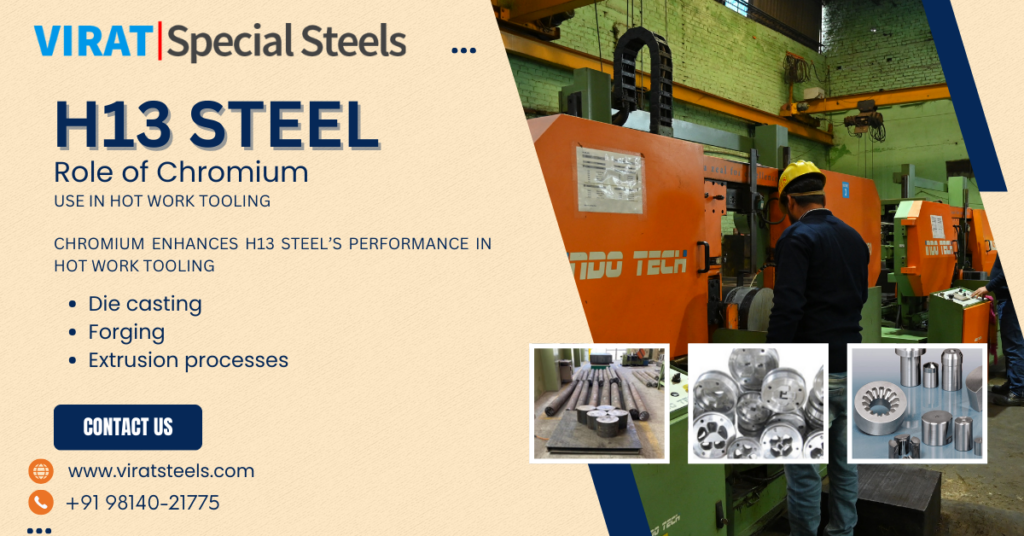
Use in Hot Work Tooling
Chromium enhances H13 steel’s performance in hot work tooling, such as die casting, forging, and extrusion processes. Its resistance to thermal fatigue ensures longevity and efficiency.
Conclusion
Chromium plays a pivotal role in the exceptional performance of H13 steel, acting as a cornerstone for its hardness, corrosion resistance, and thermal stability. This alloying element works synergistically with other materials to create a robust and versatile steel ideal for high-stress industrial applications. By optimizing chromium levels and adopting innovative practices, industries can continue to rely on H13 steel for decades to come.
Mode of Supply:
Virat Special Steels is the largest Supplier & Stockiest of H13 Steel in India. Consult our team who will assist you for H-13/ DIN 2344 / AISI H13 steel query. https://www.viratsteels.com/h13.html
Size Range in Forged / Rolled Bars:
Rounds: 13mm Dia to 1500mm Dia
Rectangular: Thickness 13mm – 500mm / Width 13mm to 1500mm
For more information or to discuss your steel needs, Virat Special Steels invites you to reach out through their contact details provided, ensuring a professional and informative experience.
Any further queries feel free to contact us :
🌐https://www.viratsteel.in 📬 info@viratsteels.com ☎+91 98140-21775
FAQs
What is the primary function of chromium in H13 steel?
Chromium enhances hardness, corrosion resistance, and heat resistance, making H13 steel suitable for high-stress applications.
Does chromium affect machinability in H13 steel?
Yes, chromium improves wear resistance and surface finish, but excessive amounts may reduce machinability due to increased hardness.
Why is chromium combined with other elements in H13 steel?
Chromium works synergistically with molybdenum, vanadium, and carbon to create a balanced alloy with exceptional properties like toughness and thermal stability.
How does chromium improve the lifespan of H13 steel tools?
Chromium enhances wear resistance and prevents oxidation, resulting in durable tools that require less frequent maintenance or replacement.
What are the future trends for chromium in steel alloys?
Advancements in material science aim to refine chromium’s interaction with other elements, while sustainable alloying practices make its use more eco-friendly.